Research
Everything I’ve been able to find about Chanctonbury Ring. Academic papers, folklore collections, local history, first-hand accounts. I started pulling this together in late 2013 and picked it up again about twelve years later. I'm still trying to figure out what it means and how any of it connects to what happened to me. What is happening to me. Make of it what you will.
The Hill
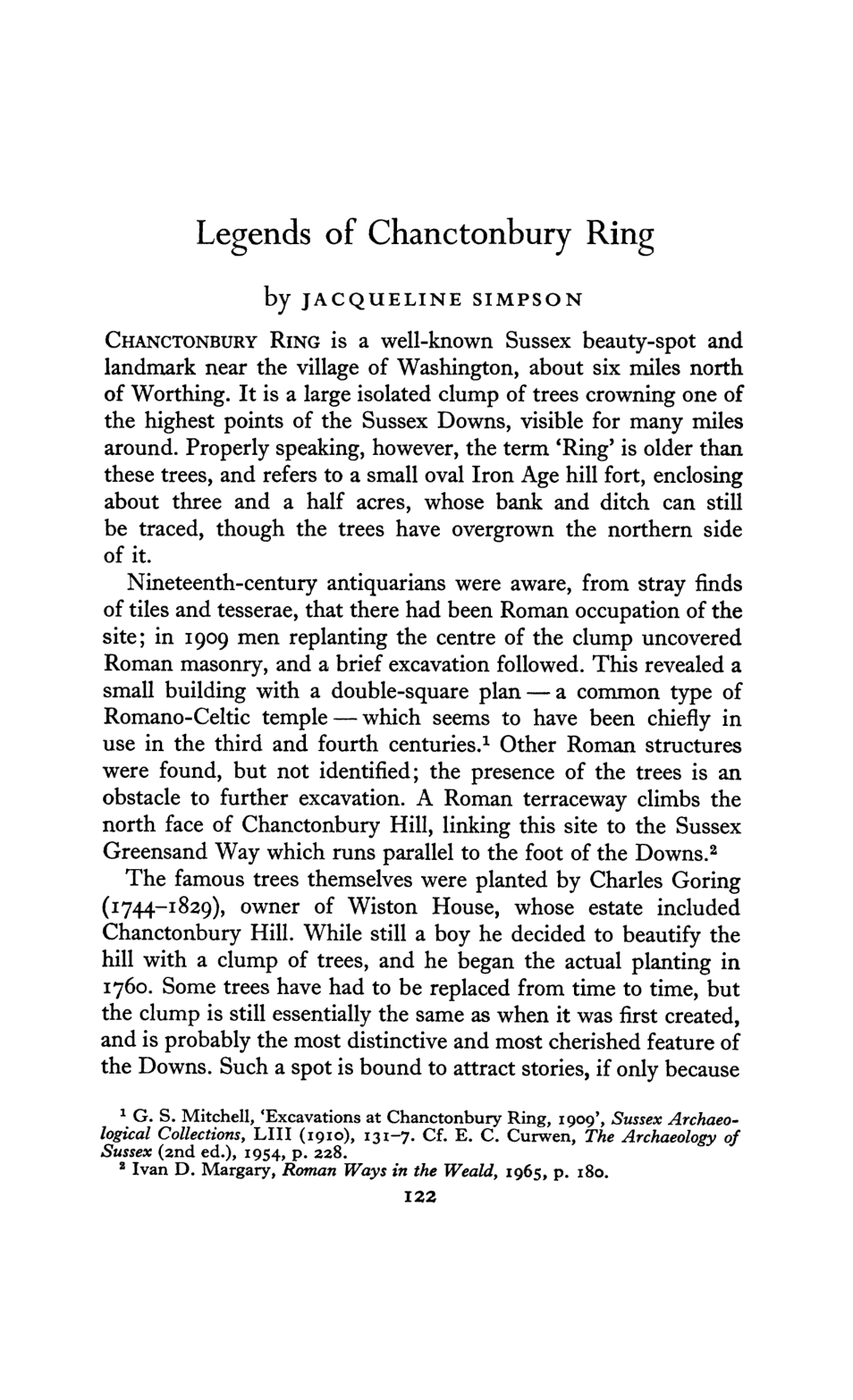
Chanctonbury Ring sits on the South Downs in West Sussex, about six miles north of Worthing. It’s an Iron Age hill fort - a raised oval of bank and ditch enclosing roughly three and a half acres - crowned with a ring of beech trees. It’s visible for miles. Sailors used to mark it from the Channel.
The trees are relatively recent. They were planted in 1760 by a young man called Charles Goring, whose family owned the Wiston Estate at the foot of the hill. Local tradition says he carried water up in bottles to help them take root. Another version says he sent footmen up with buckets. Either way, he was told he’d never live to see them grow. Sure enough, he didn't.
Underneath the trees are the remains of a Romano-Celtic temple, excavated in 1909 and again in the 1970s and ’80s. Before that, the hill was a Bronze Age ritual site. Before that, Neolithic. The archaeological record runs back roughly three and a half thousand years. People have been going to this hilltop for a very long time.
The Folklore
The best single source on Chanctonbury Ring’s folklore is a paper by Jacqueline Simpson, published in the journal Folklore in 1969. Simpson was a professional folklorist based in Worthing - five miles from the Ring - and she spent the late 1960s systematically collecting and cataloguing everything the hill had attracted. She found nine distinct categories of legend, all attached to the same hilltop.
The one most people know concerns the Devil’s soup.
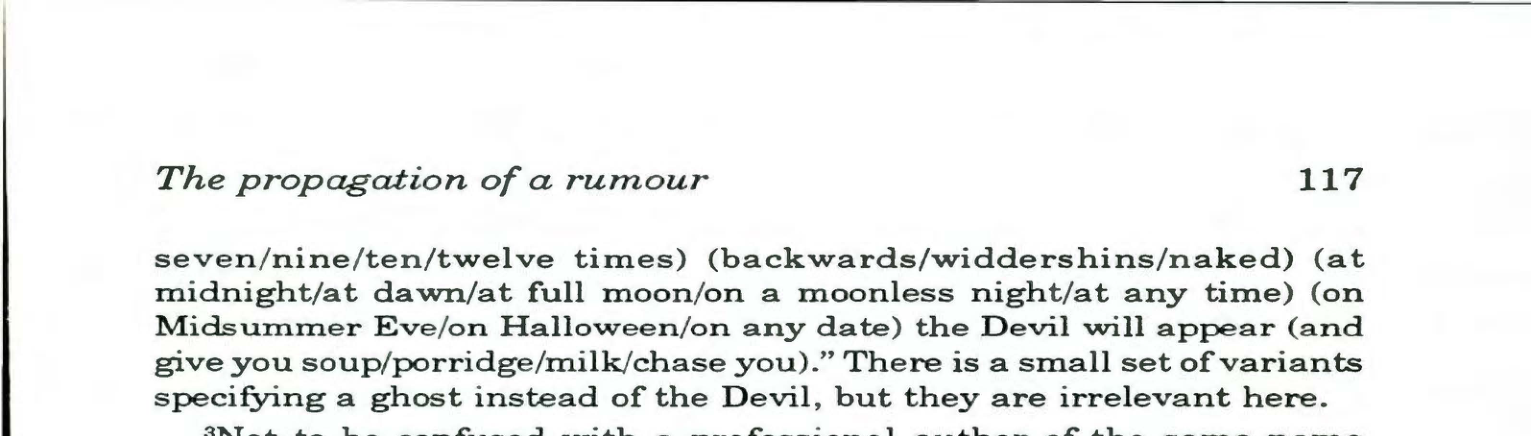
The legend goes like this: if you run a certain number of times around the Ring, at a certain time of night, under certain conditions, the Devil will appear. In some versions he offers you a bowl of soup. In others it’s porridge, or milk. In some he chases you. The details vary wildly depending on who’s telling it and when they heard it.
Simpson collected dozens of variants between 1968 and 1969, mostly from people in Worthing. The number of circuits required ranges from three to twelve. The time is midnight, or dawn, or full moon, or Midsummer Eve, or Halloween. You have to go backwards, or widdershins, or naked. Her 1994 follow-up paper includes a kind of meta-formula for the whole thing:
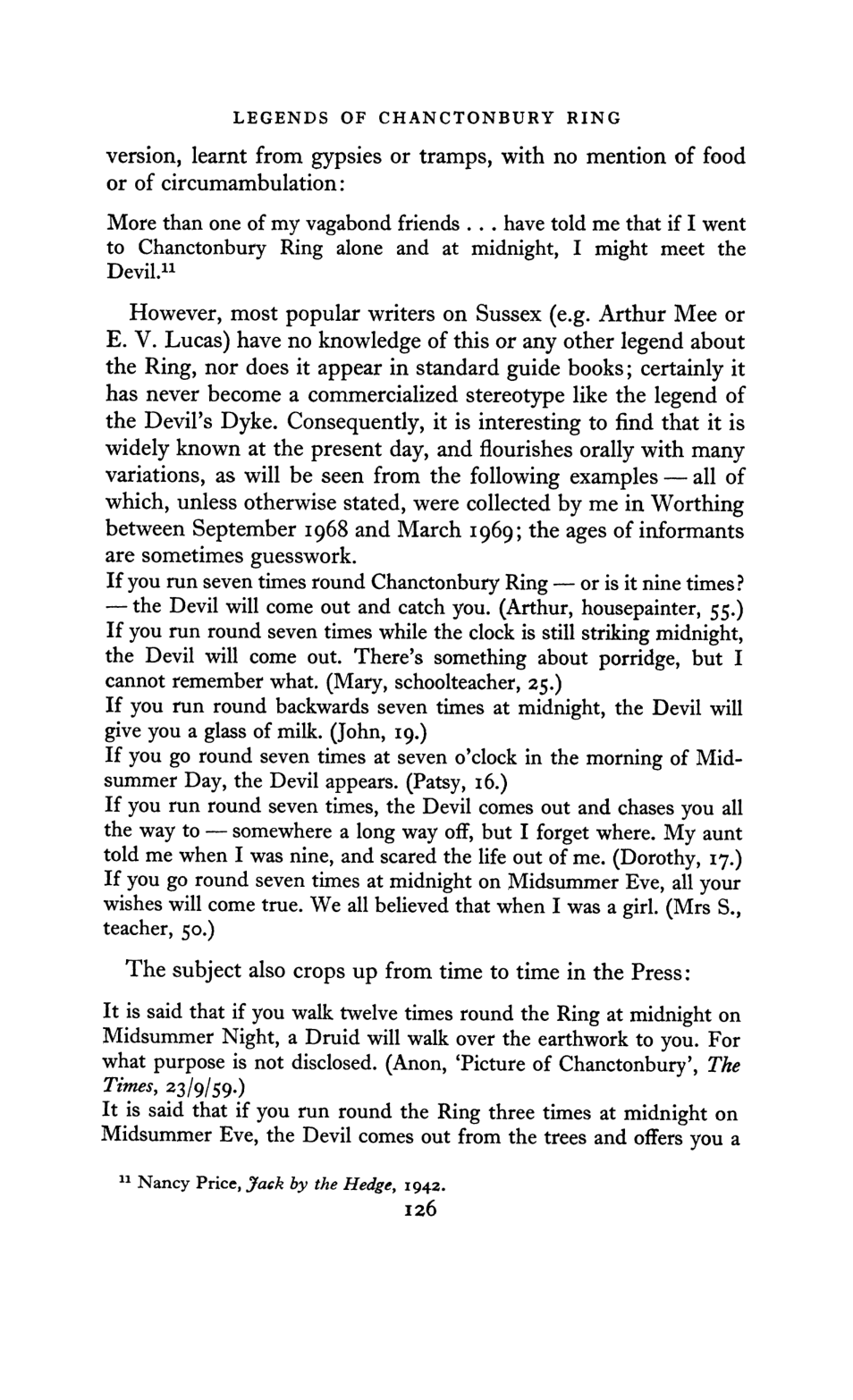
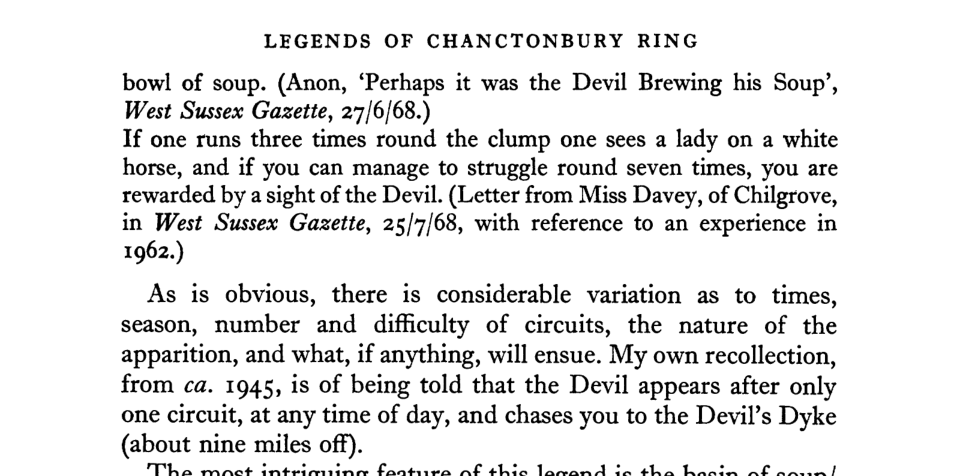
Here are some of the versions Simpson collected from local informants:
The soup is the famous bit. But it isn’t the part of Simpson’s paper that caught my eye.
This is:
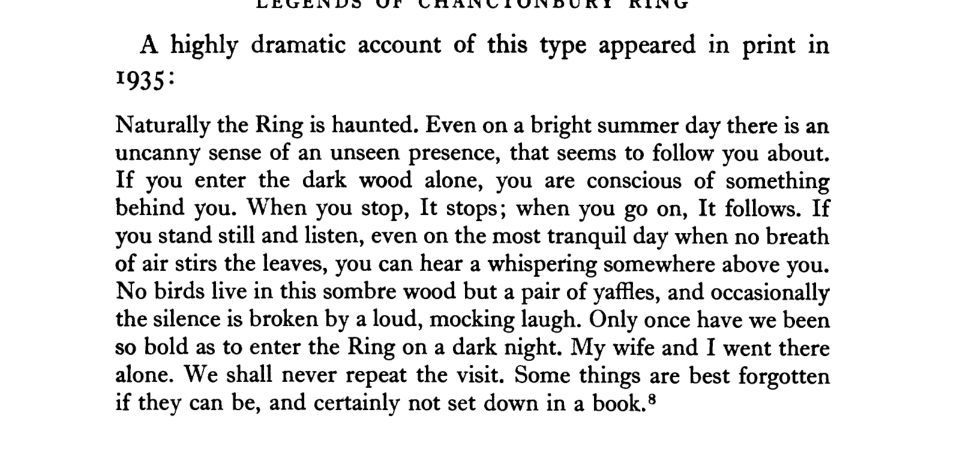
Even on bright summer days there is an uncanny sense of an unseen presence, that seems to follow you about. If you enter the dark wood alone, you are conscious of something behind you. When you stop, It stops; when you go on, It follows. If you stand still and listen, even on the most tranquil day when no breath of air stirs the leaves, you can hear a whispering somewhere.
- Edmund Gosse, 1935
That was written in 1935. Ninety years ago. The sensation described - something behind you, something following, something that stops when you stop - has been reported by visitors ever since. Not all visitors. Not even most. But enough. And I include myself.
The Witchcraft Connection
Simpson wasn’t the only one writing about the Ring. Doreen Valiente - a prominent figure in modern witchcraft, based in Brighton - wrote about Chanctonbury in at least two of her books.
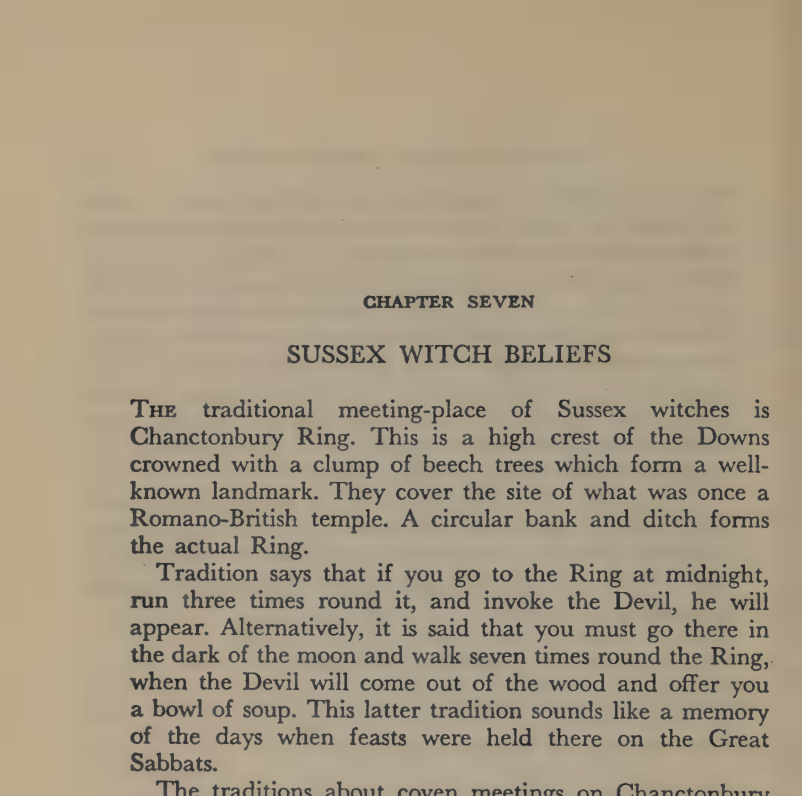
“The traditional meeting-place of Sussex witches is Chanctonbury Ring.” That’s the opening line. She connects the Devil’s soup legend to the Sabbat feasts - ritual meals held at gatherings - and notes the proximity of the Romano-British temple. Her argument is simple: old sacred places don’t stop being sacred. They get rebranded.
In her later book, An ABC of Witchcraft Past and Present (1973), Chanctonbury Ring gets its own encyclopedia entry, alongside Pendle Hill and the Brocken.
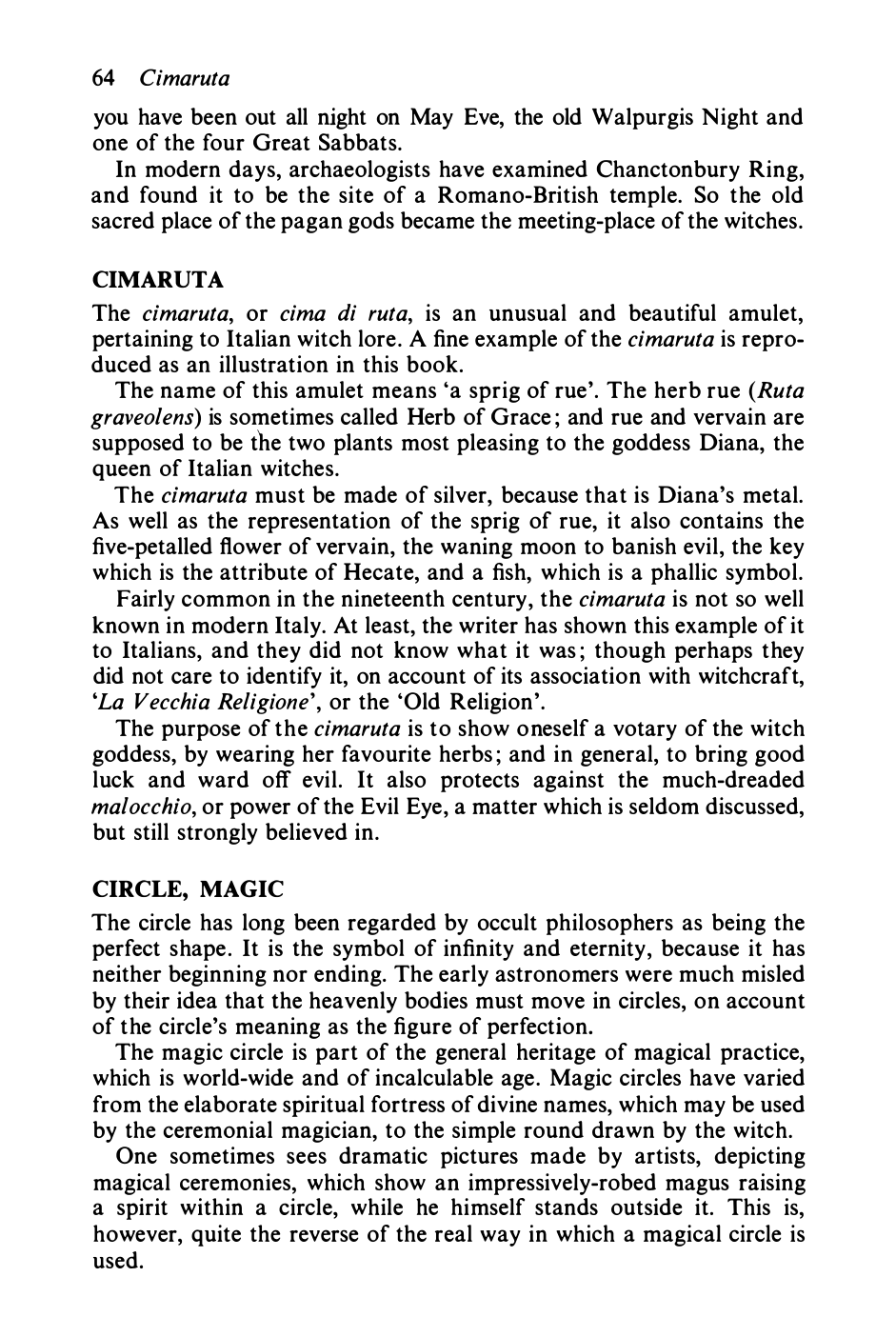
There’s one other detail in Where Witchcraft Lives that caught my eye. Valiente mentions, almost in passing, that Victor Neuberg - the poet, and one of Aleister Crowley’s closest collaborators - spent years living in Steyning. Steyning is the village at the foot of the hill. Chanctonbury Ring is directly above it.
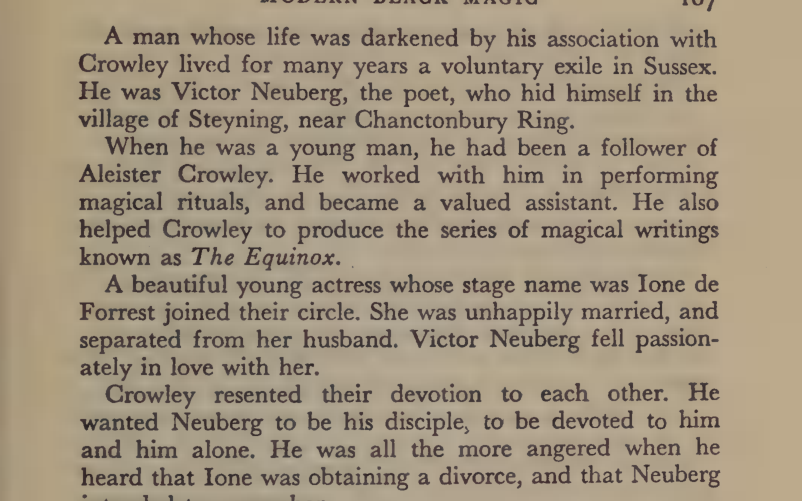
I don’t know what to do with that. I’m just noting it.
The Investigators
In 1994, twenty-five years after her first paper, Simpson published a follow-up. It was called “Hecate in the Primrose Wood: The Propagation of a Rumour.” It’s the most unsettling thing I’ve read about the Ring, and it has nothing to do with ghosts.
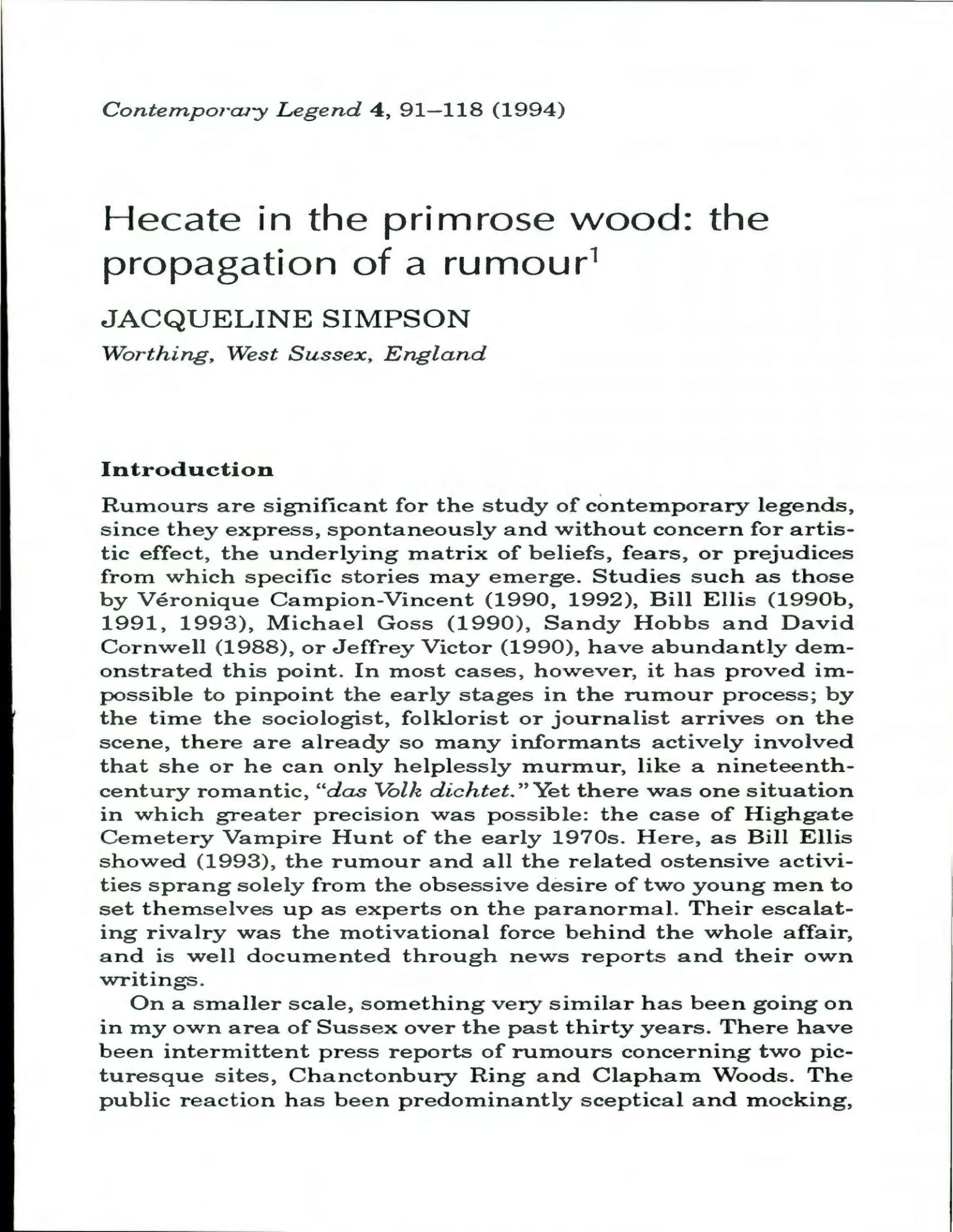
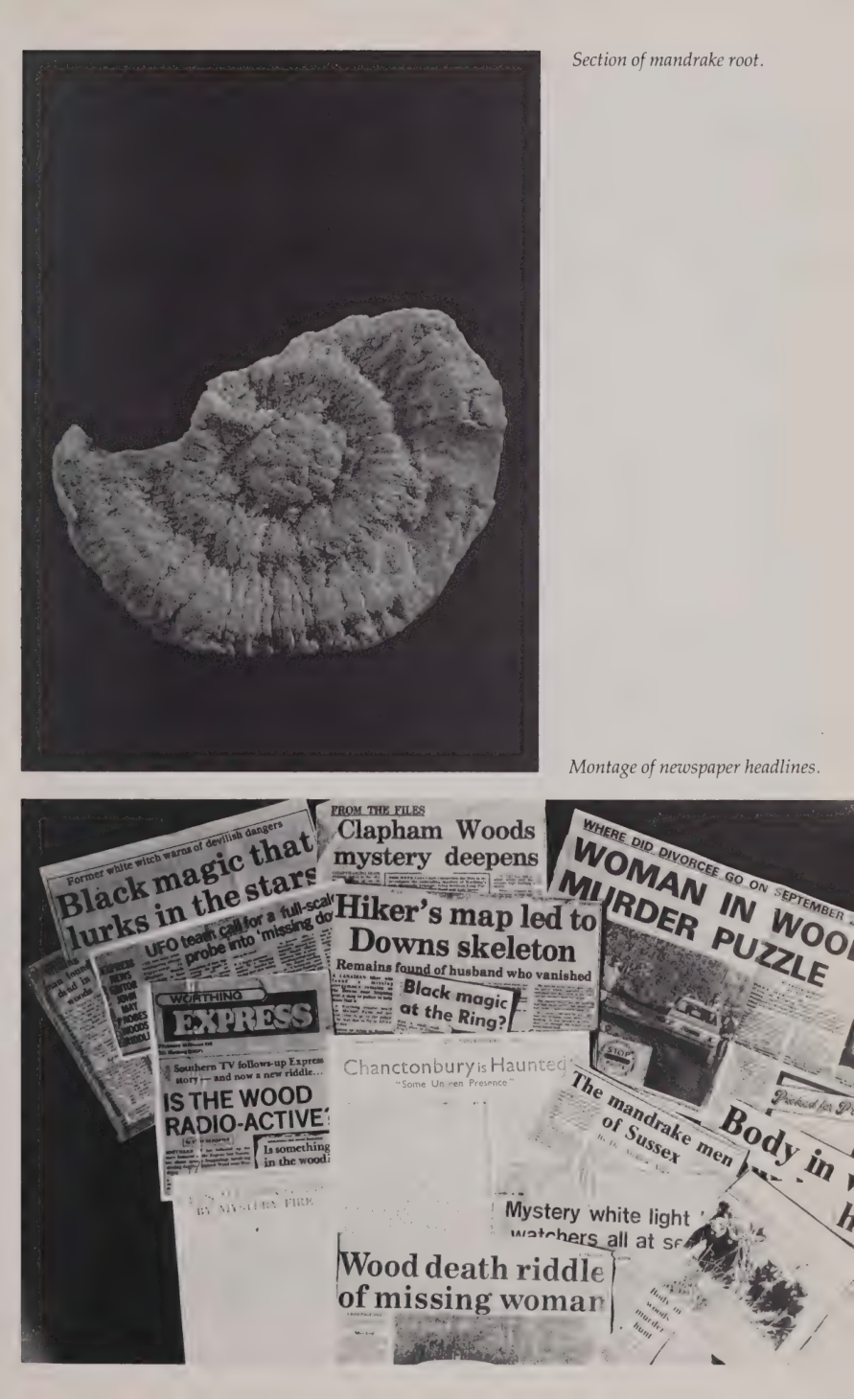
The short version: between the late 1960s and the early 1990s, the area around Chanctonbury Ring and nearby Clapham Woods became one of the most notorious paranormal hotspots in the country. Dogs disappearing. Mysterious forces paralysing investigators. A secret coven called the Friends of Hecate conducting rituals in the woods. Books were written. Television crews came. It was massive.
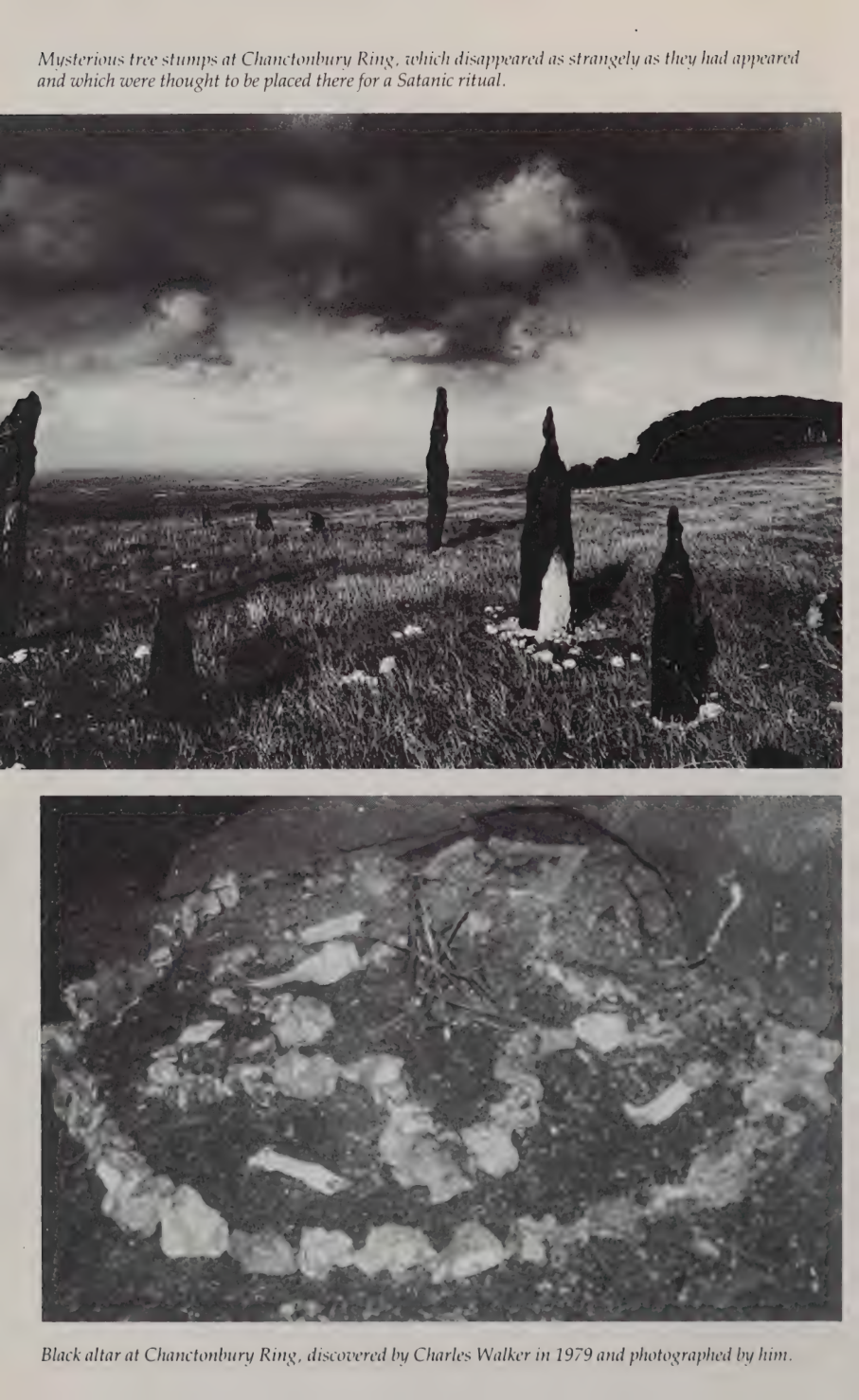
Simpson traced the whole thing back to a handful of people. Three, mainly. Charles Walker, who ran a psychic investigation group. David Stringer, who wrote a pamphlet. And Toyne Newton, a freelance photographer who wrote a book called The Demonic Connection that unified all the disconnected incidents into a single Satanic conspiracy narrative.
The documentary evidence is the thing. Simpson tracked the same events across multiple retellings over twenty-five years and showed exactly how each one inflated the original.
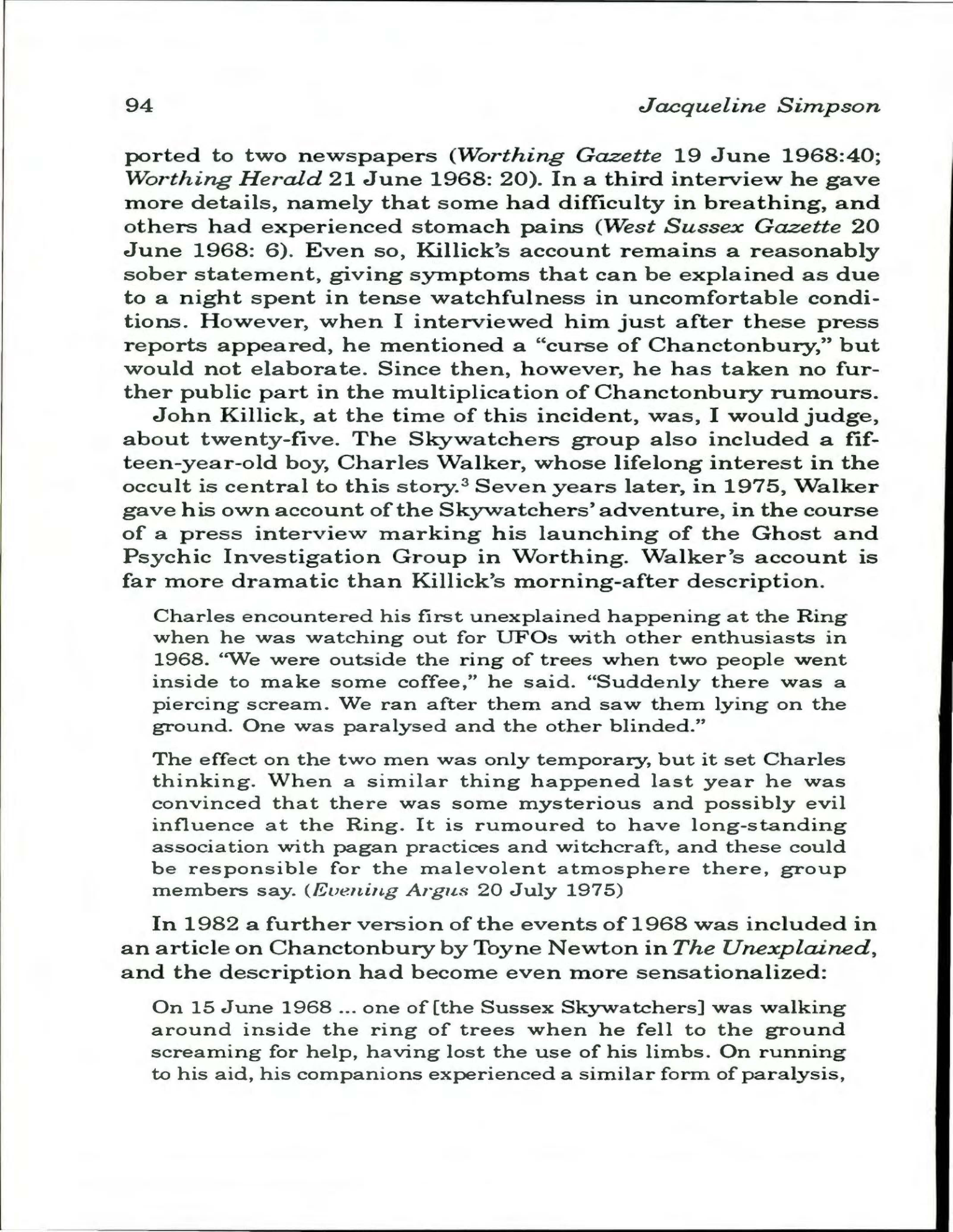
In 1968, a group called the Sussex Skywatchers held an all-night vigil at Chanctonbury Ring. Their leader, John Killick, reported to the press that some members felt cold and experienced stomach pains. A sober account. Uncomfortable but explicable.
By 1975, in Charles Walker’s retelling, the same event had become something else entirely: a piercing scream, one member paralysed, another blinded. By 1982, in Newton’s book, it was “ALL suddenly hit by a force that robbed them of the use of their arms and legs.”
Same event. Three versions. Each one bigger.
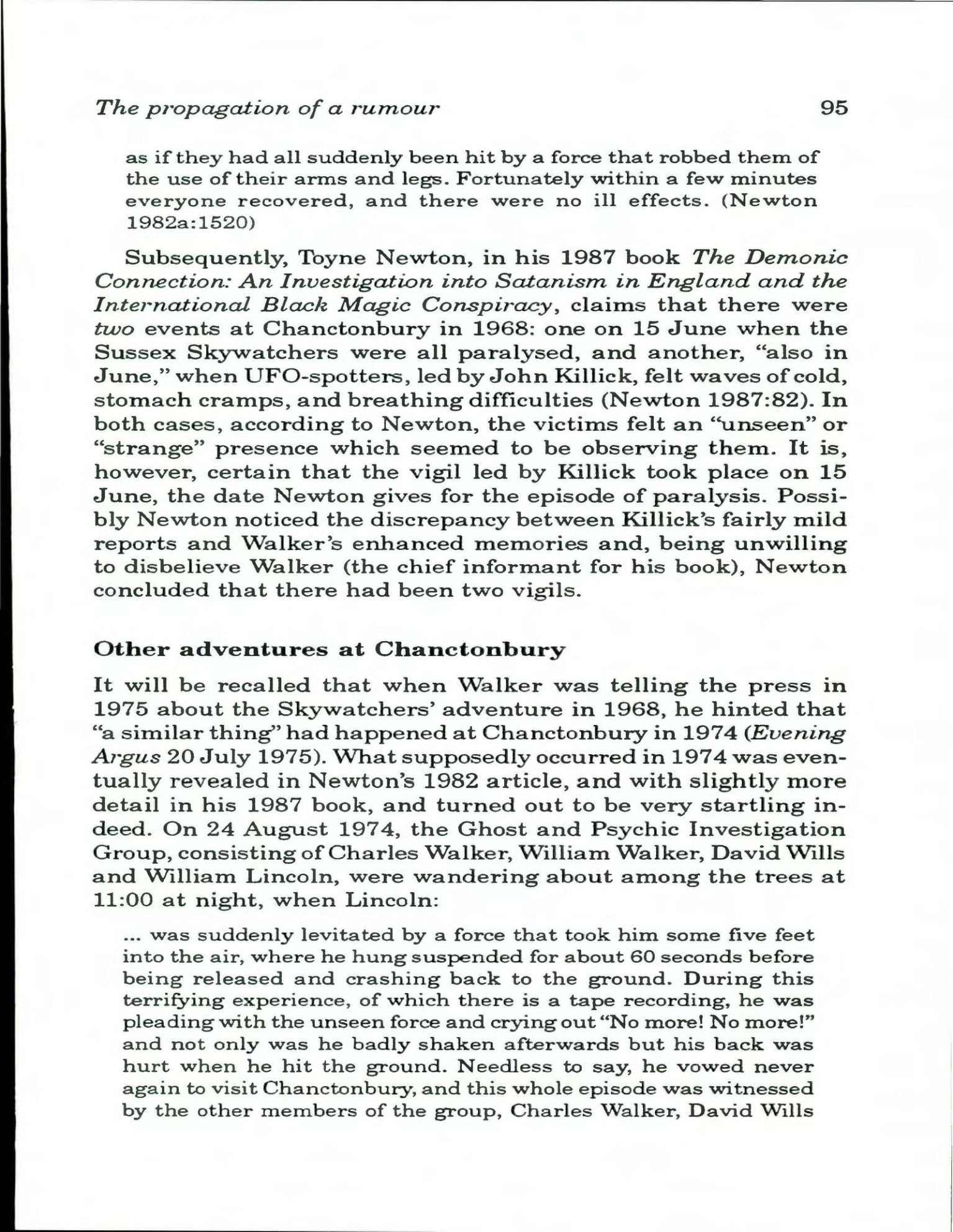
Then there are the group names. Simpson compiled a list of the organisations Walker and Stringer were involved with between 1968 and 1979. It’s the same few people, renaming themselves over and over, each new name grander than the last:
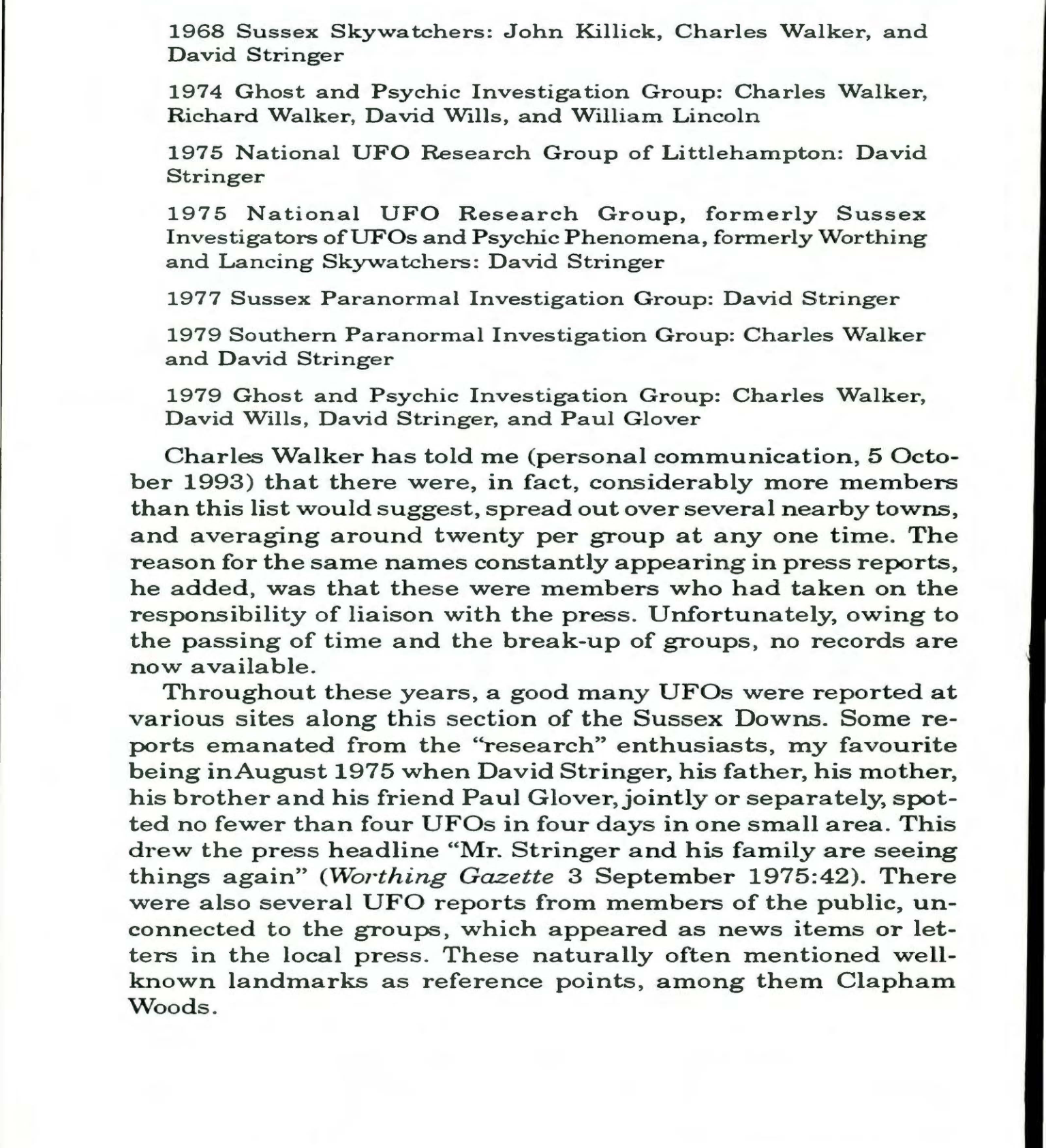
Sussex Skywatchers. National UFO Research Group. Ghost and Psychic Investigation Group. Southern Paranormal Investigation Group. Walker told Simpson the average membership at any one time was about twenty people. A handful of obsessives, reinventing themselves every couple of years, and the press treated each new name as a new organisation.
And the dogs. The famous disappearing dogs of Clapham Woods - the trigger event that kicked the whole thing off in 1975. “Did UFOs Get Those Dogs?” was the press headline. Simpson went to Clapham and asked the locals. Everyone in the village knew what had happened to the dogs. A violent gamekeeper was clubbing them and burying them. The mundane explanation was right there the whole time. It just never made it into the exciting version.
The Friends of Hecate
The centrepiece of Newton’s book was a supposed Satanic cult operating in Clapham Woods. Simpson reproduces his account:
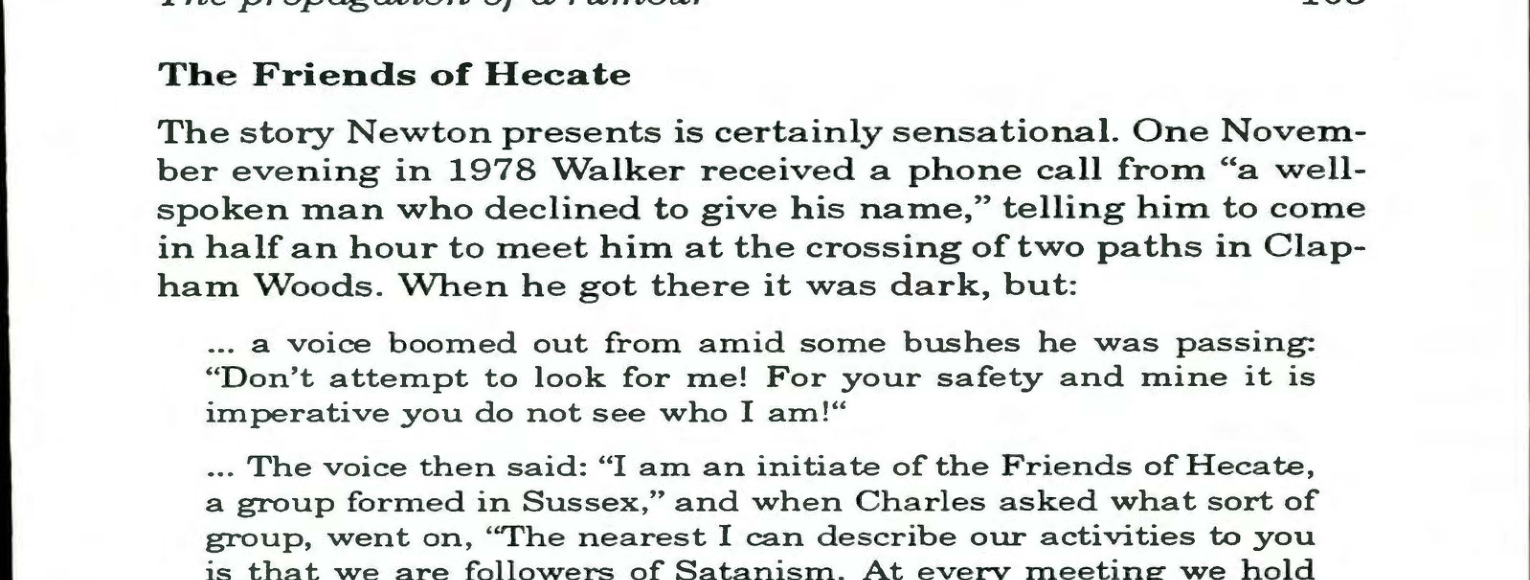
Walker claimed that one November evening in 1978, a well-spoken man phoned him and summoned him to a midnight meeting in the woods. A voice boomed from behind some bushes: “I am an initiate of the Friends of Hecate, a group formed in Sussex.” The voice described animal sacrifices and powerful protectors. Simpson notes, drily, that the tape of another incident at the Ring is conveniently “lost,” anonymous sources can never be named, and claims escalate consistently over decades.
She doesn’t accuse Walker of fabricating it. She just lays out the evidence and lets you arrive at your own conclusion. Which is more effective.
Newton’s Book
Newton’s The Demonic Connection (1987) is the book that cemented the Ring’s reputation. It’s a conspiracy theory wrapped in a paranormal investigation, and Simpson dismantles it carefully. But it contains passages about the Ring itself that are hard to dismiss entirely, because they describe something people keep reporting regardless of Newton’s credibility.
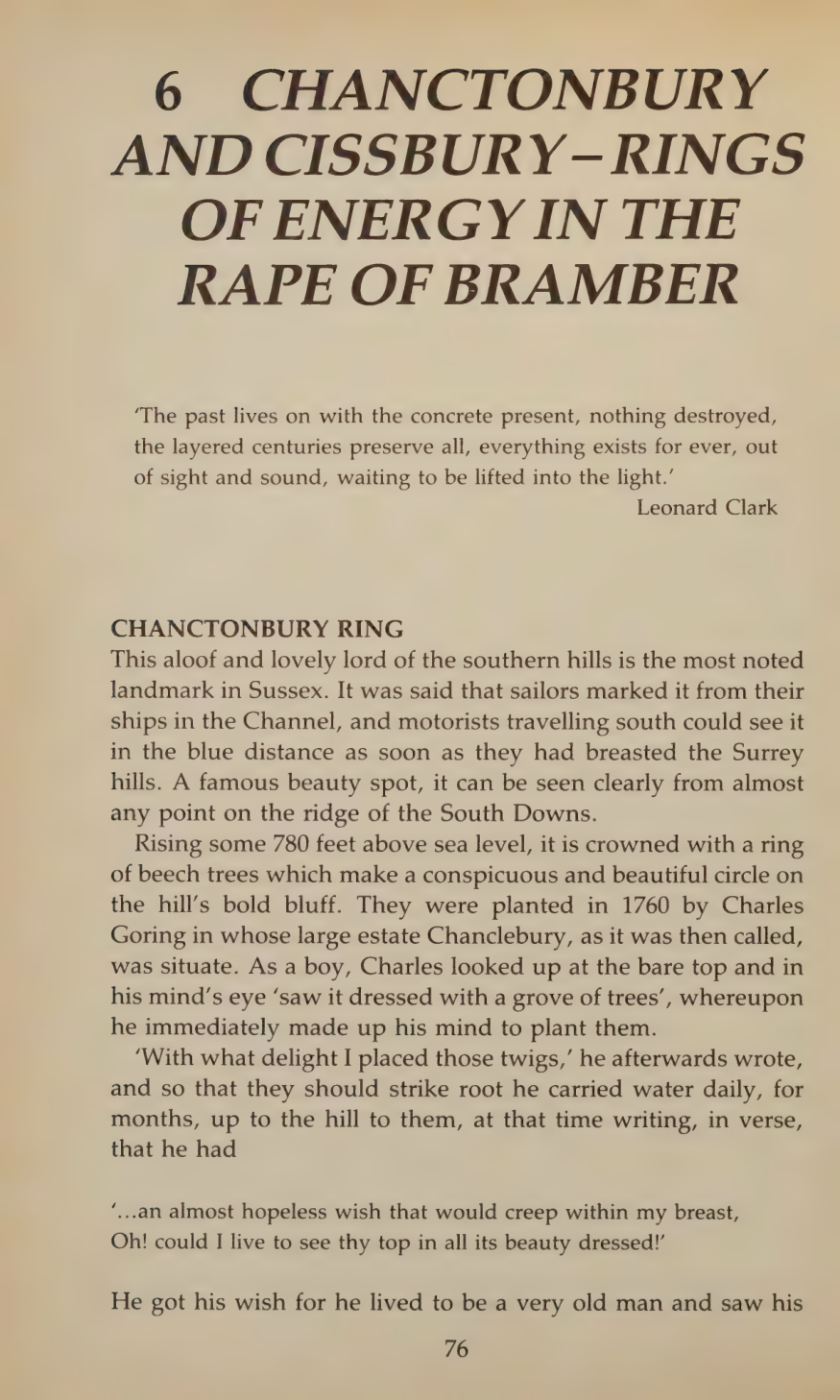
The past lives on with the concrete present, nothing destroyed, the layered centuries preserve all, everything exists for ever, out of sight and sound, waiting to be lifted into the light.
- Epigraph, The Demonic Connection
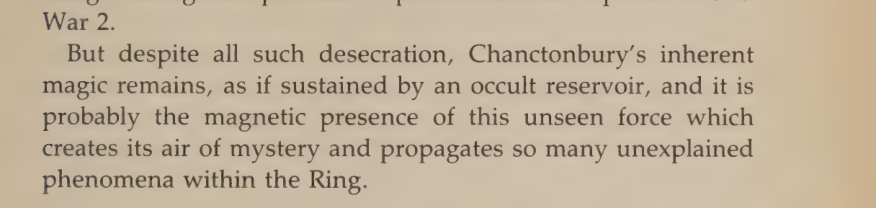
“Occult reservoir.” I can’t decide if that’s Newton being grandiose or accidentally precise.
Simpson described what Walker, Stringer and Newton were doing as a “legend-conduit” mechanism - borrowing a term from folklorists Degh and Vazsonyi. Legends spread through networks of people who already share the relevant beliefs. You don’t need to convince sceptics. You just need to reach the already-receptive.
A handful of obsessives, recycling themselves across groups and media for twenty-five years, built a mythology from scratch. Each retelling added details that weren’t in the original. By the end the legend looked massive and self-evidently true.
Simpson’s paper ends with a line that has been in my head for months:
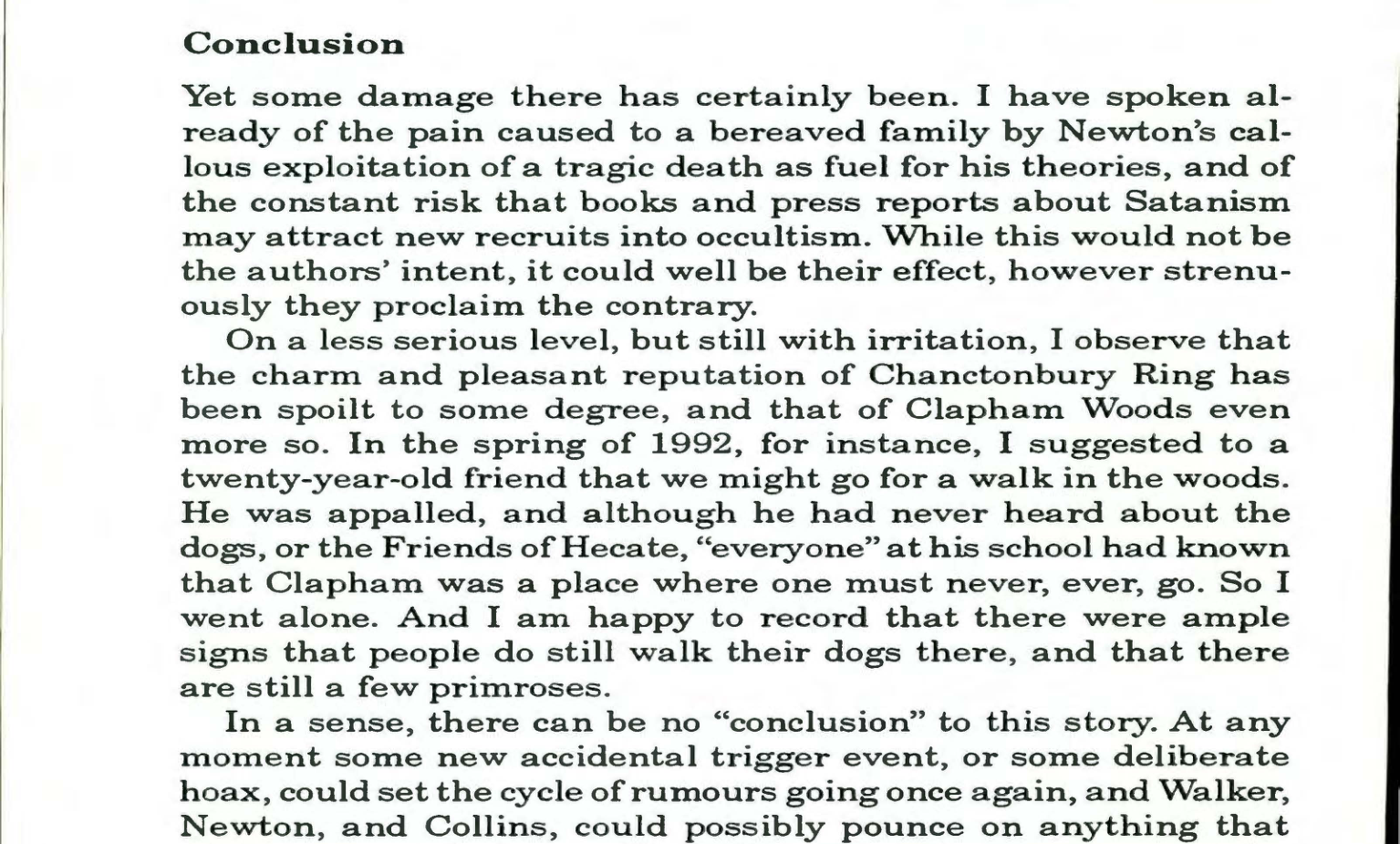
At any moment some new accidental trigger event, or some deliberate hoax, could set the cycle of rumours going once again.
- Jacqueline Simpson, 1994
She wrote that in 1994. I think about it a lot.
The Deep Time
Everything above is folklore, legend, and the twentieth-century investigators who amplified it. But the hill itself is older than all of them.
In 2008, Mark Tibble published a topographical survey of Chanctonbury Ring, carried out as an undergraduate dissertation for the University of Southampton. It’s a dry archaeological paper. It’s also the most important thing I’ve read about the place.
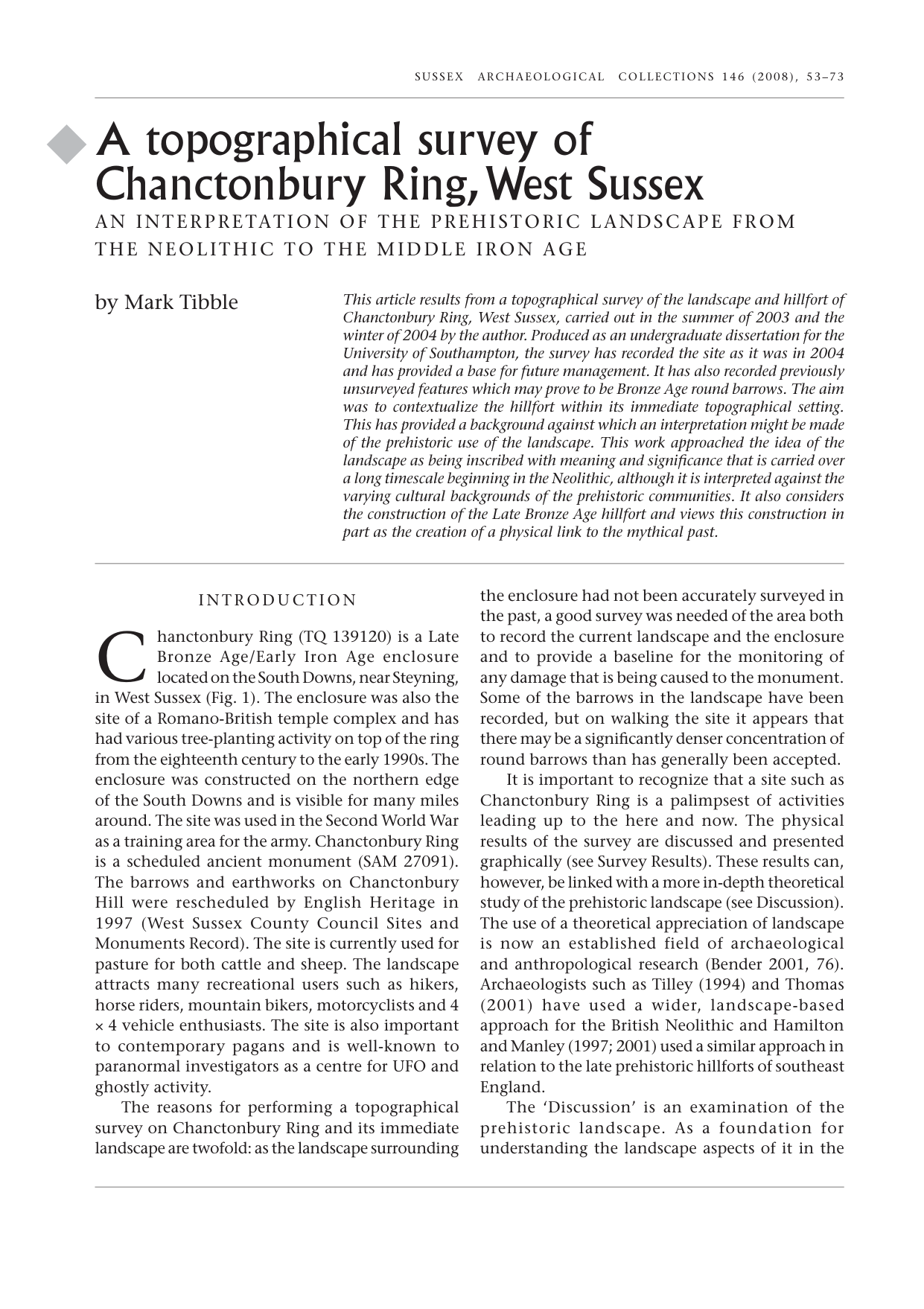
What Tibble found - through systematic fieldwork, not speculation - is that the hill has been a ritual site for approximately three and a half thousand years. Neolithic flint deposits. Bronze Age barrow cemeteries - possibly fifteen or more barrows, far more than previously recorded. A Late Bronze Age hillfort. A Romano-Celtic temple complex. Layer after layer, each one on top of the last.
His central argument is this: “The landscape was inscribed with meaning and significance carried over a long timescale beginning in the Neolithic.” The hill accumulated purpose. People kept coming back, kept building on it. The Late Bronze Age builders who constructed the hillfort weren’t starting from scratch - they were responding to something they felt was already ancient. The hill was already mythical when they arrived.
Two findings in particular stood out to me.
First: the hillfort was never a settlement. No evidence of habitation in any excavation. It was built for ritual or ceremonial purposes. People gathered there. They didn’t live there. It was a place you went to, not a place you stayed.
Second: after the Middle Iron Age, the Ring appears to have been “abandoned.” But Tibble argues this was conscious avoidance, not abandonment.
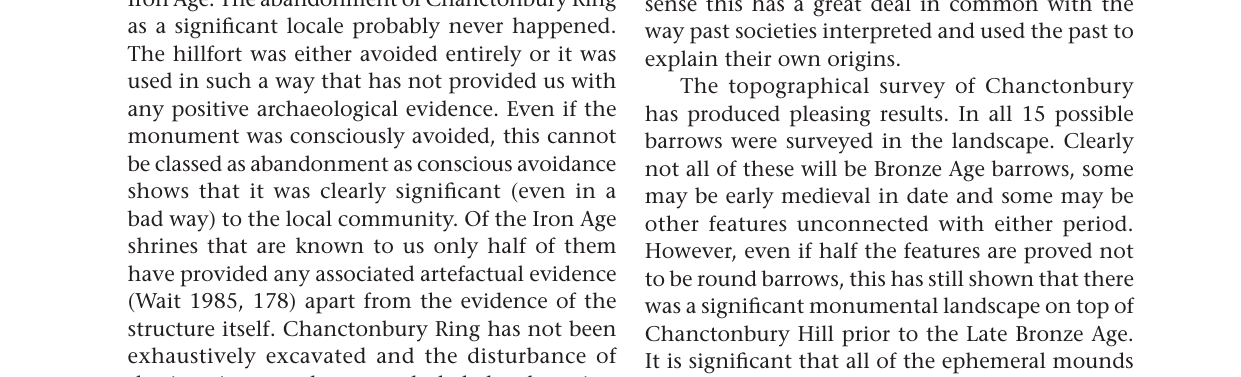
The absence of evidence isn’t evidence of absence. The site was significant enough that people stayed away. That pattern - significance expressed through avoidance - is older than any of the folklore Simpson collected.
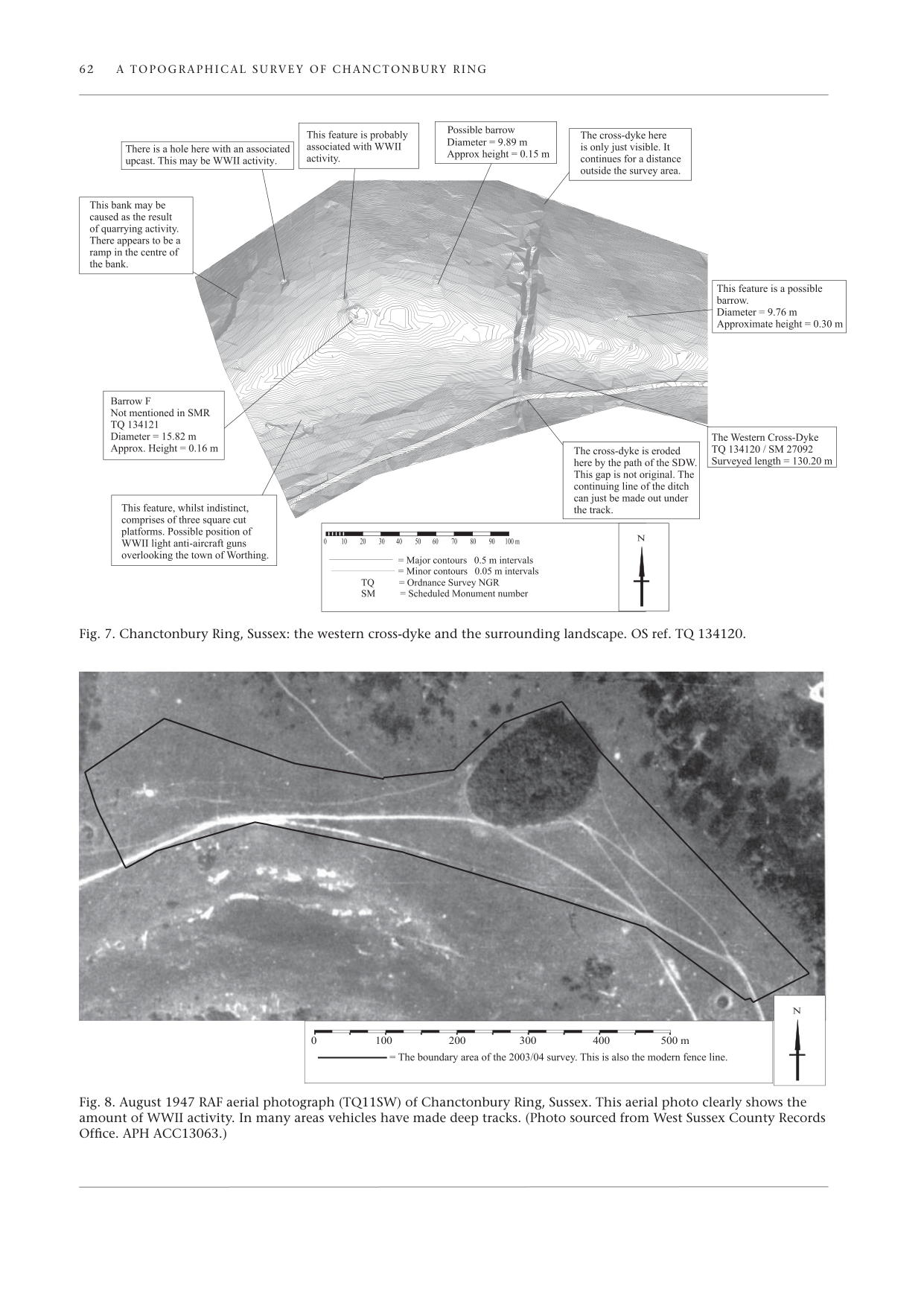
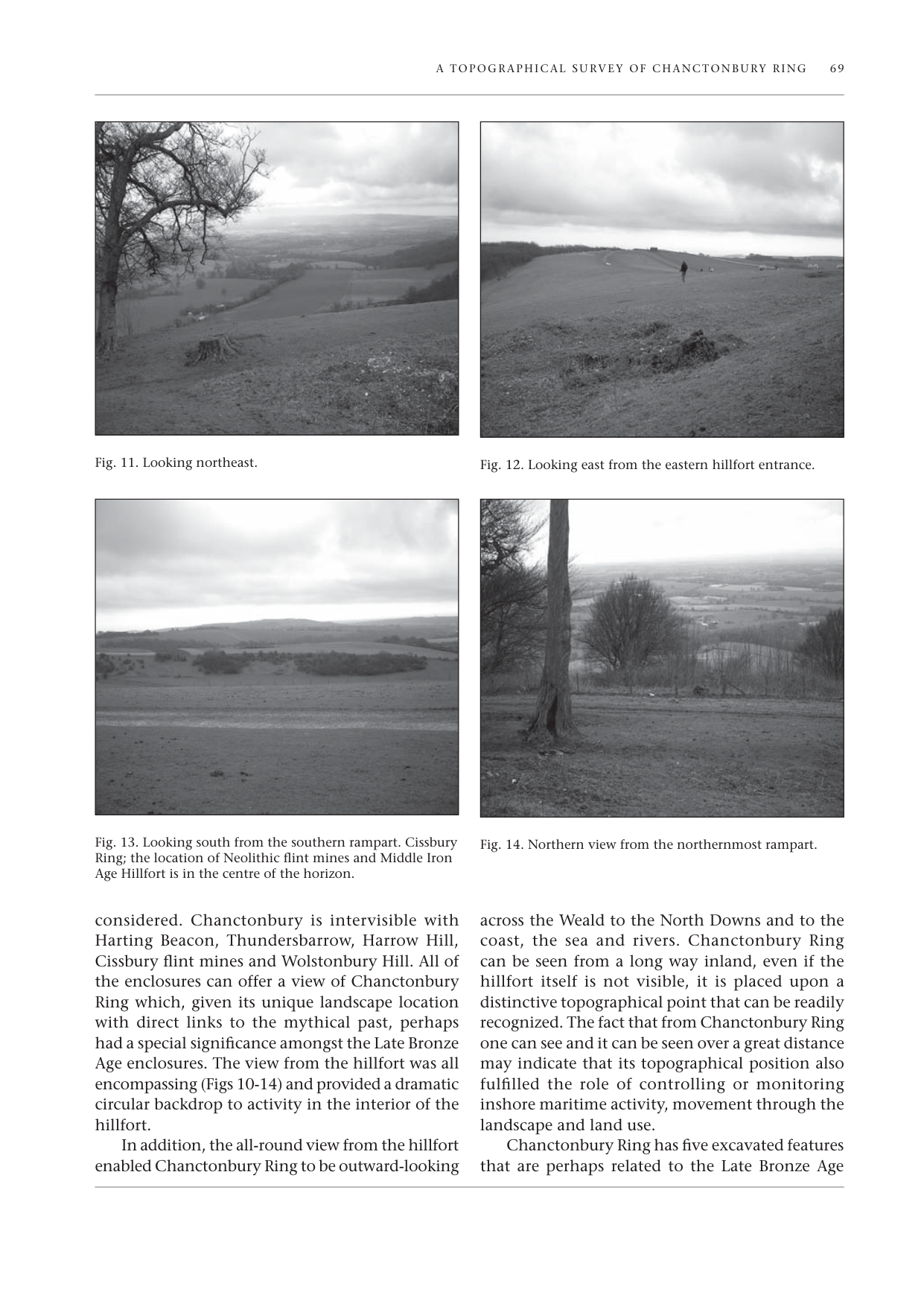
There are human remains in the ground around the Ring. A flexed skeleton of a woman, approximately thirty-three years old, found in a barrow four hundred metres west. A child’s cremation burial nearby. A Bronze Age dagger of the Camerton-Snowshill type, dating to roughly 1800–1500 BC.
Three and a half thousand years. The trees are two hundred and sixty years old. The folklore is maybe four hundred. The investigations are sixty. The hill is way older than all of it.
The Storm
On the night of October 16, 1987, the Great Storm hit southern England. Winds of over a hundred miles an hour flattened an estimated fifteen million trees across the south-east. At Chanctonbury Ring, the canopy that had stood for over two centuries was destroyed in a single night.
This matters.
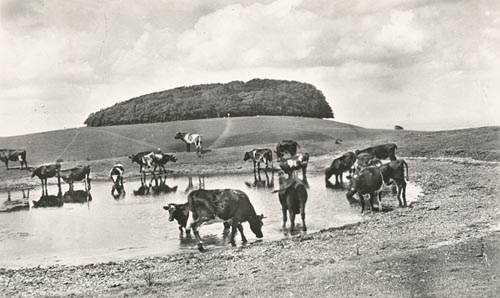
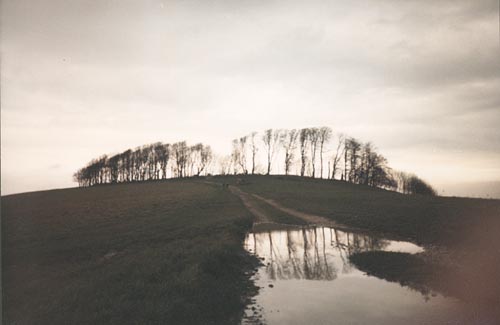
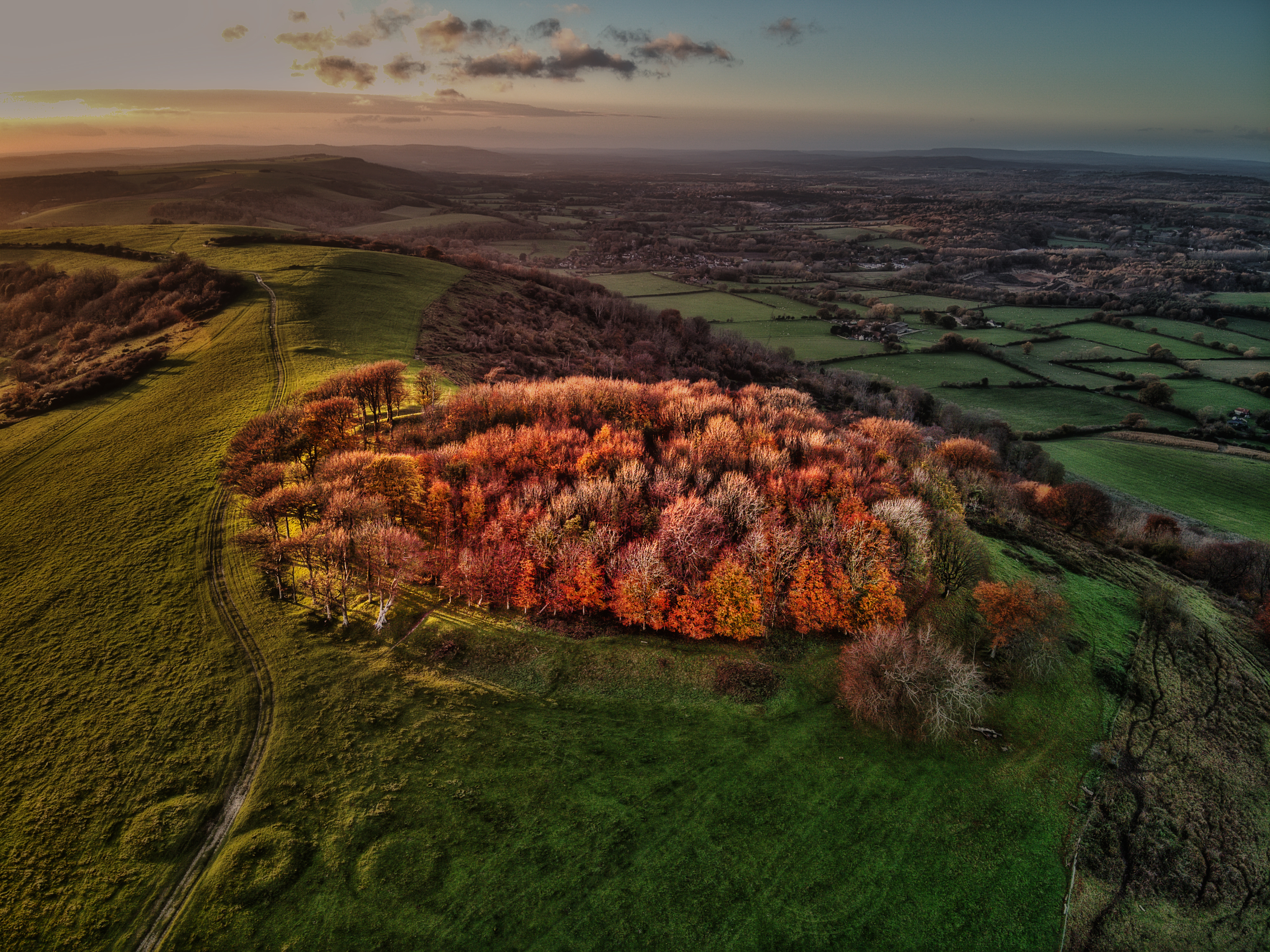
The trees were replanted after the storm. They’ve been growing for nearly forty years. If you go up there now, the canopy is thick, the interior is dark, and the Ring looks - from a distance - almost exactly as it did in the 1930s photograph.
Here’s what I noticed when I started mapping the documented accounts against the timeline:
Before 1987, there are dozens. Simpson’s informants in the 1960s. The Skywatchers vigil in 1968. Newton’s accounts through the ’70s and ’80s. Valiente’s sources. Gosse in 1935. The atmosphere accounts stretch back as far as anyone bothered to write them down.
After 1987 - after the trees were destroyed - the accounts almost stop. Not entirely. There’s one isolated report from the late 1990s, posted on a forum around 2002, describing an experience from a time when the replanted trees were barely saplings. One account, from a period when the Ring was broken.
Then nothing I can find until 2013.
I don’t know what that means. I’m just noting the pattern.
The trees were destroyed. The accounts thinned to almost nothing. The trees grew back. And here I am.
The Accounts
What follows are first-hand accounts from people who visited Chanctonbury Ring and reported something they couldn’t explain. I’m presenting them without commentary. They span ninety years. The details vary. The core sensation - being watched by something very close - does not.
Edmund Gosse, 1935
Already quoted above, but worth reading again: “Even on bright summer days there is an uncanny sense of an unseen presence, that seems to follow you about.” This is the earliest detailed atmosphere account I’ve been able to find.
Robert Macfarlane, 2012
Robert Macfarlane - the nature writer, author of The Old Ways - walked the South Downs Way and slept at Chanctonbury Ring. He writes about it in his chapter on flint.
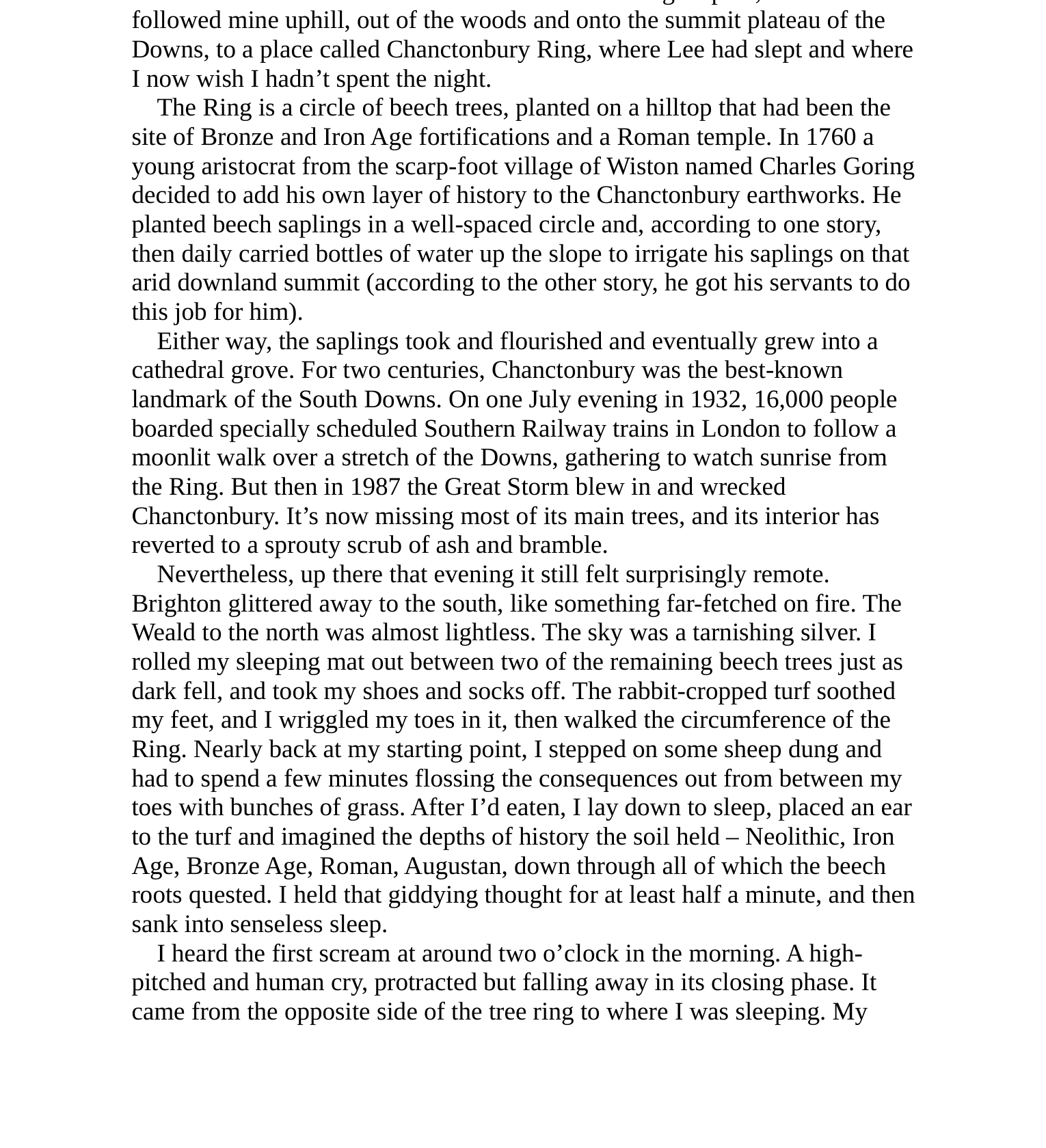
He describes the Ring, beds down inside it, and is woken at around two in the morning by screaming - high-pitched, coming from treetop height, like no bird he could identify. A second cry joins the first, “the shriek of a blade laid hard to a lathe.” He lies still. The sounds continue. He doesn’t sleep again.
Macfarlane found the bikers’ account after his own experience, and felt “first a shock of recognition and then mild pride that I’d tolerated what had put a gang of hairy bikers to flight.”
He’s a Fellow of Emmanuel College, Cambridge. Not a paranormal investigator.
The Forteana Forums Post (c.2002, experience from late 1990s)
This is the one that found me.
At some point in late 2013, I searched for something - I think the search term was “Chanctonbury Ring tinnitus” - and found a post on the Forteana Forums. The thread was about Chanctonbury Ring and Clapham Woods. The post was by a user who visited the Ring with their dog on a bright day.
The dog refused to enter the Ring and fled with its hackles raised.
The poster describes a sudden onset of tinnitus, a vice-like headache, the air feeling denser. And then this: a “watching” presence - “as if something had its face close to mine, scrutinising my features.” Described as “busy and fly-like, evil, ubiquitous and all invading.” A “faintly perceivable white noise, not really a sound, more like a quivering in the air.”
They panicked. They ran down the hill, grinding their teeth. The presence lifted abruptly at the base of the hill. They found the dog by the car, shivering and vomiting. They had never experienced tinnitus before or since.
I read that post twelve years after my own visit to the Ring. I had never described my experience to anyone in detail. The description of the presence - inches from the face, scrutinising - matched what I felt precisely enough that I had to put the laptop down and walk around the room.
The post is still there: forums.forteana.org/index.php?threads/chanctonbury-ring-clapham-woods.3152/
In the same thread, a user called AdamRang announces that he’s going to camp overnight at the Ring. “I’m definatly gonna spend a night there and I’m not going back on that.” In a follow-up he’s actively recruiting someone to go with him. Other forum members check in on him afterwards. “Hey Adam, wasn’t your proposed camping trip this weekend (just gone)?” with the note “I’ve seen you post since so I assume you must still be alive!” Someone else asks later: “Have you been camping yet AdamRang????”
He never reports back.
He almost certainly just lost interest. Probably nothing.
The Alleged EVP Recordings
Also in the Forteana thread, someone posted alleged EVP - Electronic Voice Phenomenon - recordings from the Ring. Six phrases were claimed:
1. “Shit, Oh my god.”
2. “Go on get out.”
3. “Please don’t come here.”
4. “Turn the light off.”
5. “Turn the light off Bitch.”
6. “Hide.”
I have no way to verify these. The originals may no longer be accessible. I’m noting them because “Please don’t come here” doesn’t fit the pattern of the others, and that interests me. The rest are hostile - commanding, irritated, territorial. “Please don’t come here” sounds like a warning. Or a plea.
Newton’s Ring
I’ve been hard on Newton. Simpson was harder. But his chapter on Chanctonbury does catalogue something that the academic sources mostly leave alone - the sheer volume of reported phenomena inside the Ring across the twentieth century.
Phantom figures. The “tall misty shape gliding in and out of the trees.” The Saxon shade. The midnight druid. Temperature drops. The feeling of being watched. Equipment malfunctions. The Skywatchers’ vigil. The 1974 UFO sighting. The crucifix ripped from a man’s neck and found burning hot.
Newton explains all of this with ley lines, Satanic cults, and an “occult reservoir” sustaining the Ring’s power. Simpson says it’s manufactured mythology, inflated by three obsessive men. Both versions are probably too neat. The experiences people report at the Ring predate Walker, Stringer, and Newton by decades, and they predate the 1987 storm by centuries. Whatever Simpson is right about - and she’s right about a lot - the raw material existed before anyone started inflating it.
Sources
Simpson, Jacqueline. “Legends of Chanctonbury Ring.” Folklore, vol. 80, no. 2, 1969, pp. 122–131.
Simpson, Jacqueline. “Hecate in the Primrose Wood: The Propagation of a Rumour.” Contemporary Legend, vol. 4, 1994, pp. 91–118.
Tibble, Mark. “A topographical survey of Chanctonbury Ring, West Sussex.” Sussex Archaeological Collections 146, 2008, pp. 53–73.
Valiente, Doreen. Where Witchcraft Lives. London: Aquarian Press, 1962.
Valiente, Doreen. An ABC of Witchcraft Past and Present. London: Robert Hale, 1973.
Newton, Toyne (with Charles Walker & Alan Brown). The Demonic Connection: An Investigation into Satanism in England. Poole: Blandford Press, 1987.
Macfarlane, Robert. The Old Ways: A Journey on Foot. London: Hamish Hamilton, 2012.
Gosse, Edmund. Father and Son and other writings (the Chanctonbury passage is quoted in Simpson 1969, attributed to 1935).
Forteana Forums thread #3152: forums.forteana.org/index.php?threads/chanctonbury-ring-clapham-woods.3152/